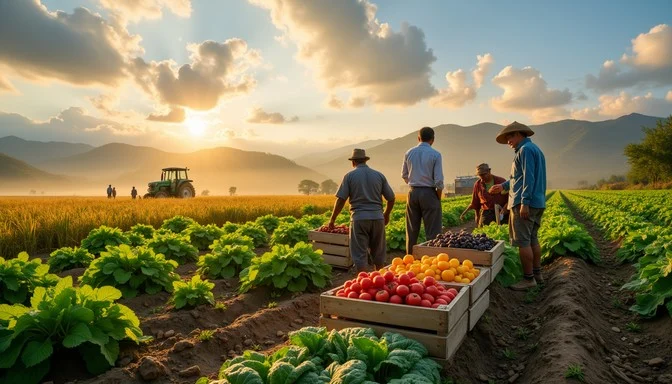
If you're sourcing produce for a wholesale business, a retail chain, or a HoReCa operation overseas, India is one of the most reliable places in the world to buy from. But working with a vegetable exporter India trusts takes a bit of homework — the right partner, the right paperwork, and the right expectations around timing. This guide walks through what actually matters.
Why buyers import fresh vegetables from India
India grows an extraordinary range of produce nearly year-round, thanks to its diverse climate zones. Onion, potato, garlic, ginger, tomato, cabbage, cauliflower, beans, okra — most staple vegetables that international kitchens and retailers rely on are grown somewhere in India at commercial scale, often at a price point that's hard to match elsewhere.
That said, not every supplier is set up for export. A good vegetable export services India provider needs to handle far more than just growing and picking — cold storage, grading, documentation, and freight all have to work together, or shipments arrive late, inconsistent, or simply spoiled.
What "fresh" actually requires
Freshness on arrival isn't about how recently something was picked — it's about what happens between picking and delivery. A fresh vegetable exporter Pune buyers can rely on typically follows a tight sequence:
- Harvest and pre-cooling — produce is cooled within hours of harvest, not days
- Grading and sorting — batches are separated by size and quality before packing
- Cold storage — temperature-controlled holding until dispatch
- Export packaging — mesh bags for onion and potato, ventilated cartons for delicate produce like tomato and okra
- Reefer transport to port — the cold chain doesn't break during the final leg to the shipping container
Skip any one of these steps and shelf life drops fast. As a result, sourcing from clusters near Pune, Maharashtra makes sense — the region has strong agricultural infrastructure and relatively short farm-to-port distances for west-coast shipping.
Onions: a case study in why sourcing matters
Take onions as an example. An onion exporter India buyers return to repeatedly usually isn't the cheapest option on paper — they're the one whose onions still look and store the same way three weeks after arrival as they did on day one. Onion is forgiving compared to other produce (60+ day shelf life when stored correctly), but only if it was cured and graded properly before packing. Consequently, working with an established cold chain operator pays off over sourcing from a broker with no storage infrastructure of their own.
Cold chain logistics: the part buyers often underestimate
Most first-time importers focus heavily on price and product quality, and underestimate logistics. But cold chain logistics India exporters manage — reefer containers, port handling, transit scheduling — is often the difference between a smooth relationship and a one-time order that never repeats.
A few things worth asking any exporter before placing your first order
- Do they own or directly manage cold storage, or do they outsource it?
- What's their actual transit time to your nearest port, not just a general estimate?
- Can they provide temperature logs for the shipment?
- Do they have experience shipping to your specific country before?
Certifications: what to check before you buy
This is non-negotiable. Any legitimate exporter should hold the certifications below.
APEDA registration is required for agricultural exports from India, FSSAI licensing confirms food safety compliance, and the IEC code is required for any international trade transaction. In addition, the exporter should be able to provide a phytosanitary certificate for each shipment, confirming produce is free of pests and disease.
If a supplier can't readily produce these, that's a red flag. An APEDA registered exporter Pune buyers can trust will have these documents ready before you even ask — not scrambling to arrange them after your PO is confirmed.
Getting your first order right
For a first-time buyer, the smart move is starting with a smaller trial order before committing to a large recurring contract. It gives you a chance to evaluate packaging quality, transit condition, and communication responsiveness without much risk. Therefore, a good exporter will welcome this — anyone pushing hard for a large first order with no trial period is worth a second look.
Typical information to have ready when reaching out
- Product and grade specification
- Quantity per shipment (and how often)
- Preferred packaging format
- Destination port
- Any country-specific import documentation requirements on your end
Final thoughts
Sourcing fresh produce internationally always comes with some complexity, but it doesn't have to be complicated if you're working with the right partner. Look for real cold storage infrastructure, proper certification, and a team that responds quickly and clearly — those three things matter more than almost anything else.
Whether you're placing your first trial order or scaling up an existing relationship, NorthernLights Logistics LLP makes it straightforward to import fresh vegetables from India — with integrated cold chain storage, grading, packaging, and freight coordination for shipments to UAE, UK, Singapore, Netherlands, Malaysia, and Saudi Arabia. View our full product range or get in touch to discuss your requirements.